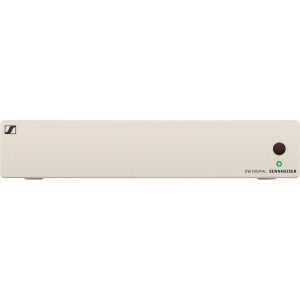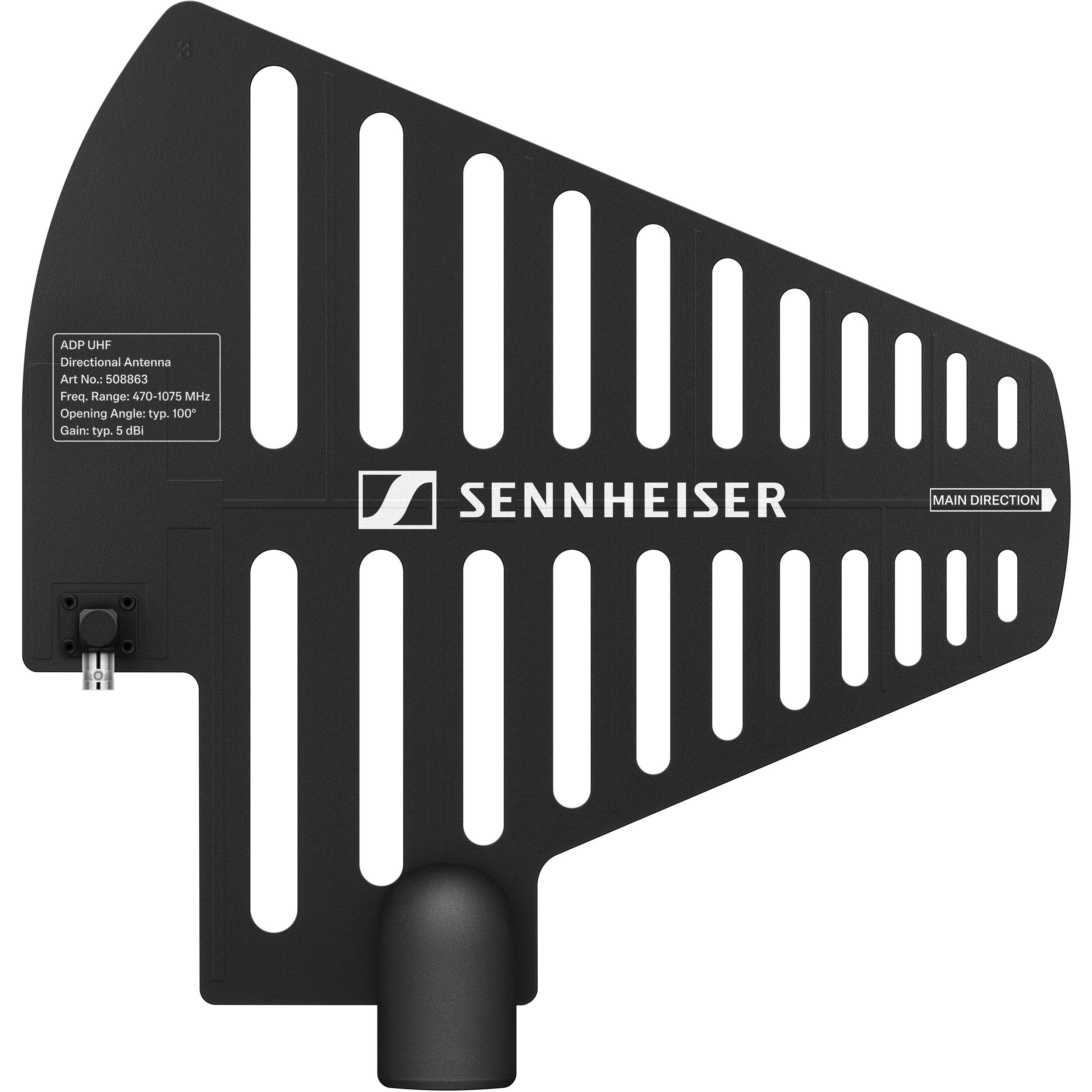
Sennheiser ADP UHF
Passive directional UHF paddle antenna for Sennheiser EW-D and other wireless systems, covering 470-1075 MHz with 5 dBi typical gain and a BNC connector.
$299.95
Product Details
The Sennheiser ADP UHF is a passive, directional paddle antenna that improves the range and reliability of wireless microphone and in-ear systems. Covering 470 to 1075 MHz, it focuses reception toward the stage and away from interference, making it a smart upgrade for Sennheiser EW-D systems and other UHF wireless gear.
Highlights
- Passive directional antenna for UHF wireless systems
- Wide 470 to 1075 MHz frequency range
- Typical gain of 5 dBi
- Approximately 100-degree apex angle at -3 dB
- Front-to-back ratio greater than 14 dB
- 50-ohm impedance with BNC female connector
Sennheiser ADP UHF: Better Wireless Reception
The small whip antennas that come with most wireless receivers pick up signal in all directions, including interference from behind and beside the receiver. A directional paddle antenna like the ADP UHF focuses on the area in front of it, typically the stage, while rejecting signals from the rear. That improves the signal-to-noise ratio of your wireless system, reducing dropouts and extending usable range.
The ADP UHF is passive, so it requires no power and has no DC path, making it simple to add to an existing setup.
Where to Use the ADP UHF
Directional antennas are especially helpful in large rooms, outdoor events, and installations where the receiver rack is far from the stage or behind walls and equipment. Mount the antennas on stands or walls with a clear line of sight to the performance area, and use quality low-loss coaxial cable to connect them to your receivers or antenna distribution system.
Setting Up Directional Antennas
Use two ADP UHF antennas for diversity receivers, spacing them apart and angling them toward the stage. Keep antennas above the audience’s heads for a clear line of sight, avoid placing them near metal structures, and keep cable runs as short as practical. When feeding multiple receivers, use an antenna splitter or distribution amplifier.
What to Pair With the ADP UHF
Pair the ADP UHF with Sennheiser EW-D wireless systems, low-loss BNC coaxial cables, antenna mounts or stands, and an antenna splitter for multi-channel racks. A second ADP UHF completes a diversity setup.
Why Upgrade Your Wireless Antennas?
Wireless problems are usually reception problems. Before replacing microphones or receivers, upgrading to directional antennas positioned correctly often solves dropouts and noise. It’s one of the most cost-effective improvements you can make to a church, theater, or venue wireless system, especially as more wireless devices compete for the same spectrum.
Sennheiser ADP UHF FAQ
Does the ADP UHF need power? No. It’s a passive antenna with no DC path.
Is it only for Sennheiser systems? It’s designed for Sennheiser EW-D and covers the 470-1075 MHz range, so it can be used with other UHF systems in that range that use BNC antenna connections.
Sennheiser ADP UHF Specifications at a Glance
- Type: passive directional antenna
- Frequency range: 470 to 1075 MHz
- Gain: 5 dBi typical
- Apex angle (-3 dB): about 100 degrees
- Front-to-back ratio: greater than 14 dB
- Impedance: 50 ohms
- Connector: BNC female
- Operating temperature: -10 to +55 C
Who Buys the Sennheiser ADP UHF
- Churches with multiple wireless microphones
- Theaters and performing arts centers
- Production and rental companies
- Venues with long distances between stage and receivers
Why Buy the Sennheiser ADP UHF From Metro Sound & Lighting
Metro Sound & Lighting isn’t a catalog-only retailer. We design, install, and service wireless systems in-house, so our team can plan frequencies, position antennas, and troubleshoot dropouts, then support your system after installation. We offer B2B and integrator pricing for churches, schools, and venues.
Browse more options in our Wireless Accessories category, or see the full specifications on the official Sennheiser ADP UHF specifications page.
Additional information
| Type | Passive Directional |
|---|---|
| Frequency Range | 470-1075 MHz |
| Gain | 5 dBi Typical |
| Apex Angle (-3 dB) | About 100° |
| Connector | BNC Female, 50 Ω |