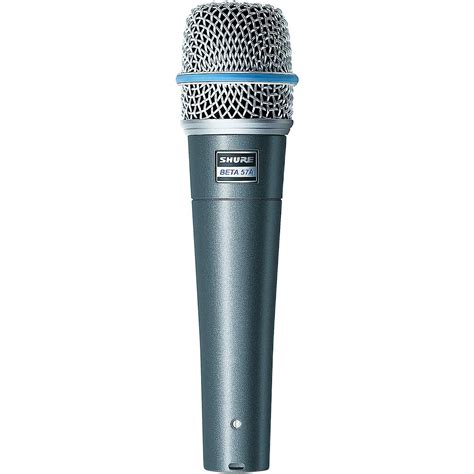
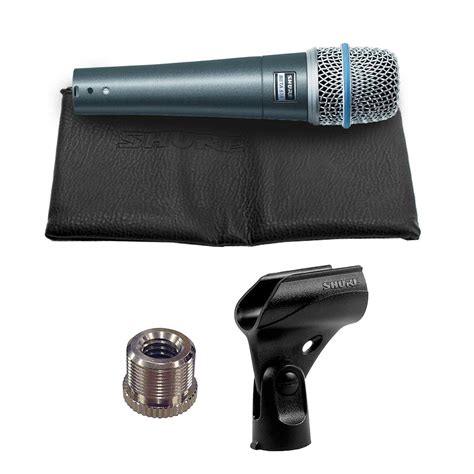
Shure Beta 57A
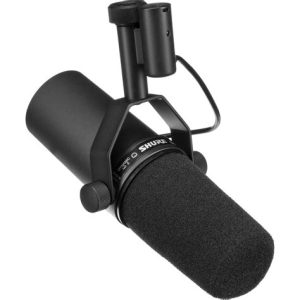
Supercardioid dynamic instrument microphone with high gain before feedback, a hardened steel grille, pneumatic shock mount, and neodymium magnet. Ideal for snare, toms, guitar amps, and brass.
$169.00
Product Details
The Shure Beta 57A is a supercardioid dynamic instrument microphone built for the loudest, busiest stages. It takes the proven concept of the SM57 and adds a tighter pickup pattern, higher output, and extra durability, giving engineers more gain before feedback and better isolation on snare drums, toms, guitar cabinets, and horns.
Highlights
- Supercardioid polar pattern for high gain before feedback and excellent off-axis rejection
- Tailored 50 Hz to 16 kHz frequency response for clean, punchy instrument reproduction
- Neodymium magnet for high output and an excellent signal-to-noise ratio
- Hardened steel mesh grille resists wear and abuse
- Advanced pneumatic shock mount minimizes handling and stand noise
- Low-profile head that fits easily between drums
Shure Beta 57A: More Isolation for Loud Stages
On a crowded stage, every open microphone picks up everything around it. The Beta 57A’s supercardioid pattern is narrower than a standard cardioid, so it focuses on the source it’s aimed at and rejects sound from the sides. On a snare drum, that means less hi-hat bleed. On a guitar amp, it means less drum spill and more control at front of house.
The neodymium magnet gives the Beta 57A a hotter output than the SM57, which helps when you’re working with lower-output sources or long cable runs, and the tailored frequency response brings out the crack of a snare and the bite of a guitar amp without harshness.
Beta 57A Placement Tips
On snare, aim the mic at the center of the head from a couple of inches above the rim, pointing away from the hi-hat. The supercardioid pattern has its null slightly off the rear axis, so angle it to place the hi-hat in that dead zone. On a guitar cabinet, start an inch or two from the grille, pointed at the edge of the speaker cone, then move toward the center for a brighter tone.
Beyond Drums and Guitar
The Beta 57A also performs well on trumpet, saxophone, and trombone, where its high SPL handling and rejection help in loud horn sections. Many vocalists use it as a handheld vocal mic too, especially in loud bands where feedback is a concern.
Beta 57A vs. SM57: Which Should You Choose?
The SM57 is the classic all-around instrument mic, with a cardioid pattern and a sound engineers know by heart. The Beta 57A trades a bit of that familiarity for a tighter supercardioid pattern, higher output, and a slightly more extended high end. Choose the Beta 57A when you are fighting bleed and feedback on a loud stage, or when you want a little more sparkle on snare and guitar. Choose the SM57 when you want the most proven, budget-friendly option. Many engineers keep both in the kit and pick based on the source.
Shure Beta 57A Specifications at a Glance
- Type: dynamic
- Polar pattern: supercardioid
- Frequency response: 50 Hz to 16 kHz
- Sensitivity: -51 dBV/Pa (2.8 mV) at 1 kHz
- Impedance: 150 Ω rated (290 Ω actual)
- Connector: 3-pin XLR
- Weight: 275 g (9.7 oz)
Who Buys the Shure Beta 57A
- Live sound engineers miking drums, amps, and horns
- Touring and local bands upgrading from SM57s
- Churches and venues dealing with loud stages and feedback
- Recording studios tracking snare and guitar
Why Buy the Shure Beta 57A From Metro Sound & Lighting
Metro Sound & Lighting isn’t a catalog-only retailer. We sell, install, and service pro audio in-house, so we can help you choose the right microphone for each source on your stage, build a complete drum and instrument mic package, and support it after the sale. We design sound systems for churches, schools, and venues, and offer B2B and integrator pricing on volume orders.
Browse more options in our Drum Microphones category, or see the full specifications on the official Shure Beta 57A product page.
Additional information
| Polar Pattern | Supercardioid |
|---|---|
| Transducer | Dynamic |
| Frequency Response | 50 Hz – 16 kHz |
| Sensitivity | -51 dBV/Pa (2.8 mV) |
| Impedance | 150 Ω rated (290 Ω actual) |
| Connector | XLR |
| Weight | 275 g (9.7 oz) |